Sustainable Campus
Gauhati University has been awarded District Green Champion Award 2021-22 for its green initiatives in the campus and the neighbourhood. Award Letter
Sustainability @ GU
The university sits by the side of a small hilly area with natural wetlands and forests. The campus is full of greenery and is a site of rich biodiversity. Out of a total 484 acres of campus land, only about 16% is covered by built-up structures. Natural forests cover about 19% of the campus while natural wetlands cover about 16% of the area. The university also has a Botanical Garden which is spread across of an area of 2 acres by the side of a hill and an Aquaculture and Biodiversity Centre.
- GU has now switched to almost 100% LED lighting.
- Streets lights are automatically controlled through day-night sensors.
- Increasing solar power coverage.
- All new air conditioning units procured are inverter-based compressor with 5-star energy rating.
- The university has its own water distribution system with gravity-assisted distribution and provision of aquifer recharging.
- Segregated garbage collection and routine disposal.
- Vermicomposting units.
- Plastic-free campus initiative.
The Energy and electricity audits are regularly conducted in the campus. On average, 2,579,440 units per month of electricity was consumed by the University in the year 2020-21 including the residential quarters, which is slightly lesser of around 0.4% monthly average electricity consumption from the last year. To compensate for the rising power requirement, solar panels are installed within the GU campus. Annually, GU has generated 288,000 KWH of electrical energy through the solar panels. However, production was reduced to 139,000 KWH in the period 2020-21. Solar capacity of GU campus was augmented with a 50 KWP new solar panel.
Biodiversity @ GU
The Gauhati University campus is home to different varieties of fauna as well as flora. A recent audit found increasing trends of most of the biotic components in the GU campus probably due to the enhancement of suitability and succession of the habitat mosaic supported by the existing land cover. The campus supports a number of IUCN threatened and IWPA 1972 Schedule-I species and as well as endemic species.
- 33 species of mammals
- 180 species of birds
- 44 species of herpetofauna
- 16 species of free-ranging and 74 species of cultured fish
- 180 species of butterflies
- 58 species of Odonata
- 50 species of Coleoptera
- 30 species of Hymenoptera
- 30 species of Orthoptera
- 89 species of Arachnida (88 spiders and 1 scorpion)
- 9 species of crustacea
- 7 species of Gastropods
- 3 species of Chilipoda
- 5 species of Annelida
Notable recent additions: Crab-eating Mongoose, Golden Jackal, Yellow-throated martin, Blue-bearded bee-eater, Pale-headed wood packer, Dusky Warbler, Bluethroat, Pheasant-tailed Jacana, Common Coot, Rosy Pipit, Little spider hunter, Red-headed marlin, Black Winged Kite, Eastern Marsh Harrier, Hen Harrier, Pallid Harrier, Griffon Vulture, Red-headed Vulture, Himalayan keel-back, Banded Krait, Assam Day Gecko, and 20 new butterfly species.
Green Audit
You can go through our Green audits for last three years here:
Green Audit reports provide comprehensive insights into the university's sustainability practices, energy usage, waste management, and biodiversity data. Please refer to each report for detailed findings and recommendations for campus greening.
Green Audit reports provide comprehensive insights into the university's sustainability practices, energy usage, waste management, and biodiversity data. Please refer to each report for detailed findings and recommendations for campus greening.
Animal Corridors within the Campus
Gauhati University campus is acting as an endangered animal corridor owing to its high biodiversity and natural landscapes as well as forest areas. The campus harbours Common leopard (Panthera pardus fuscus) and IUCN endangered Bengal Slow Loris (Nycticebus bengalensis).
Animal Corridors
1.Common Leopard Corridor
Altogether 3-4 Common leopards are residing within the Gauhati University Campus and its associated forest areas annually. The overall forest complexes are such as the Gauhati University-Botanical Garden Forest complex, Gauhati University-Jalukbari reserve forest complex, and Gauhati University-Assam Engineering College forest complexes areas. The Leopard breeds in the forest area complex and 2 youngs are raised annually; after one year of age, they migrate locally through two corridors.
- Gauhati University to nearby Tetelia forest about 1.5 km through university employee quarter near Jalukbari Electricity Office, entering Tetelia through NH-37.
- Gauhati University Botanical Garden to Assam Engineering College Campus and Jalukbari Reserve Forest, passing through the private road of Assam Engineering College near AEC Guest House to Tetelia forest and Deepor beel bird sanctuary using the fellow-land and rail roads, then Rani-Garbhanga reserve forest.
2.Bengal Slow Loris Corridor
The Bengal slow loris is surviving within the Gauhati University forest-Jalukbari forest complex and near Sanskrit department forest-Jalukbari RF-AEC forest landscapes, forest area near university radar Station, and forest area near RCC-2, 4, 5 forest complex. The entire forest areas and University campus form contiguous landscapes and cannot be separated.
Faunal Diversity of GU Campus
- 33 species of mammals
- 180 species of birds
- 44 species of herpetofauna
- 16 species of free-ranging and 74 species of cultured fish
- 180 species of butterflies
- 58 species of Odonata
- 50 species of Coleoptera
- 30 species of Hymenoptera
- 30 species of Orthoptera
- 89 species of Arachnida (88 spiders and 1 scorpion)
- 9 species of crustacea
- 7 species of Gastropods
- 3 species of Chilipoda
- 5 species of Annelida
Table 1: Faunal Coverage of GU Campus
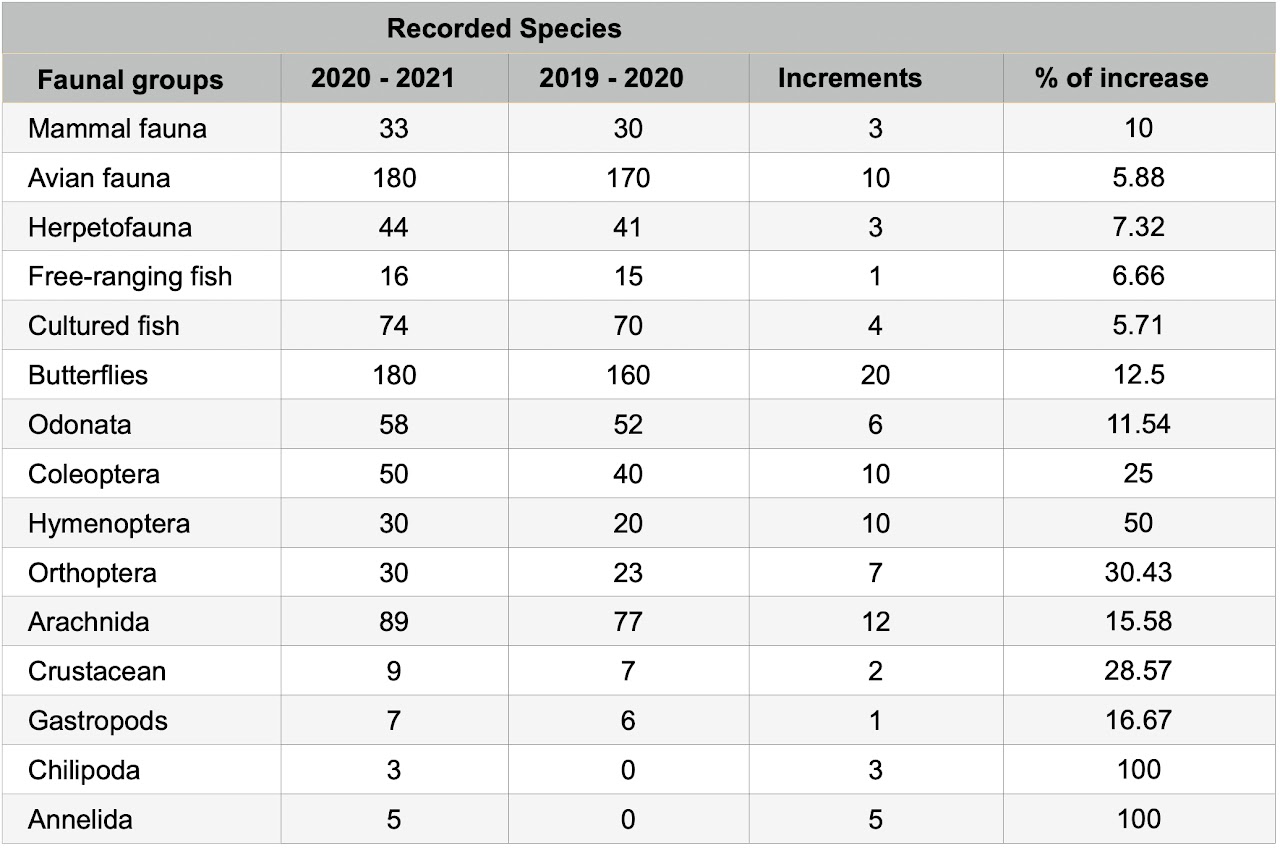
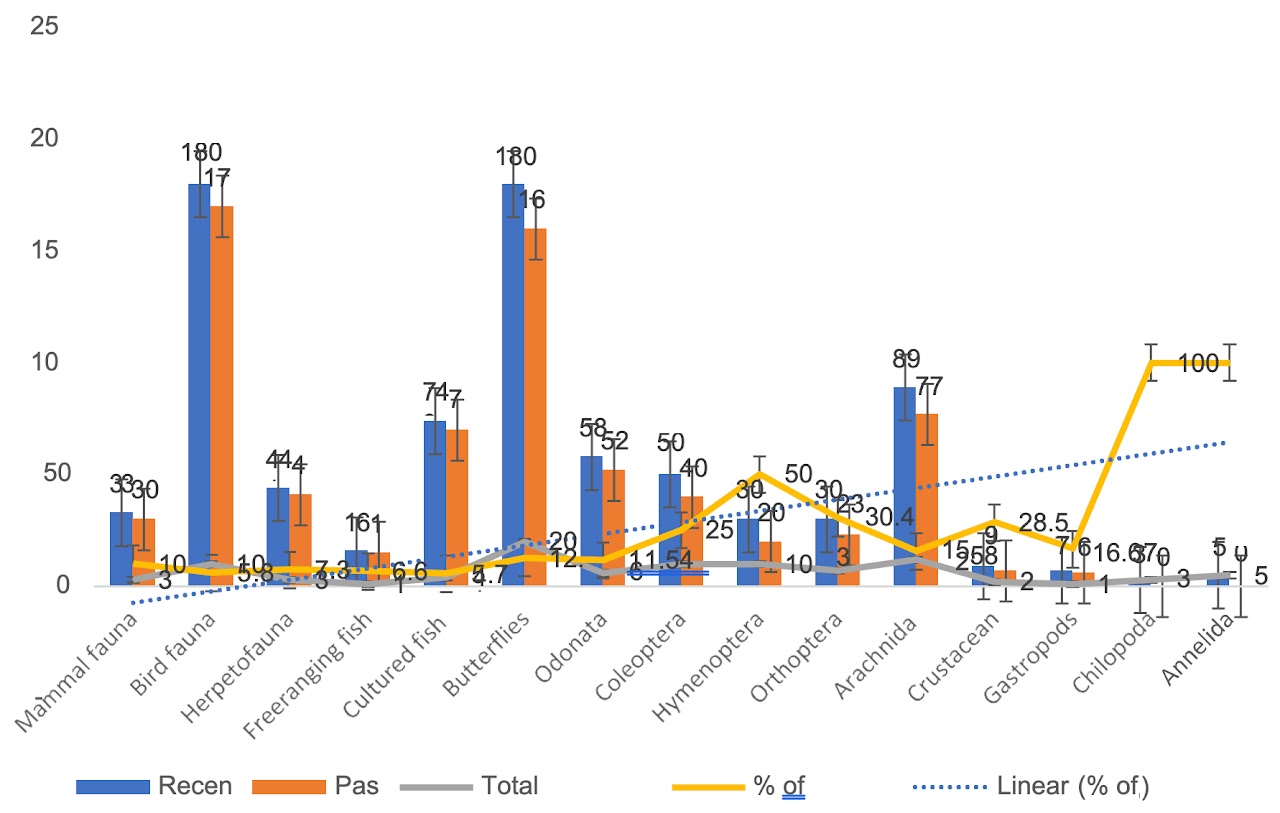
Fig. 1: Faunal Diversity Chart
Some mammals, birds, and insects found in GU campus
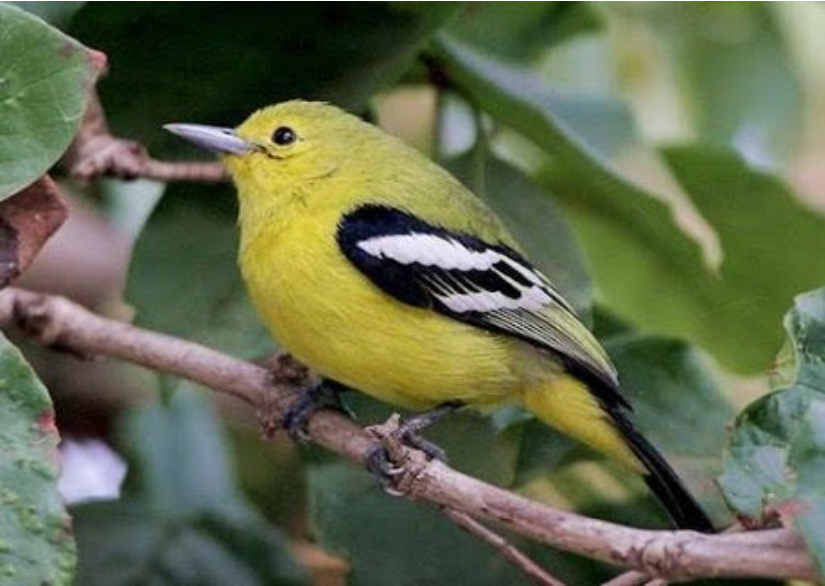 Common Iora (Aegithina tiphia)
Rose Ringed Parakeet (Psittacula krameri)
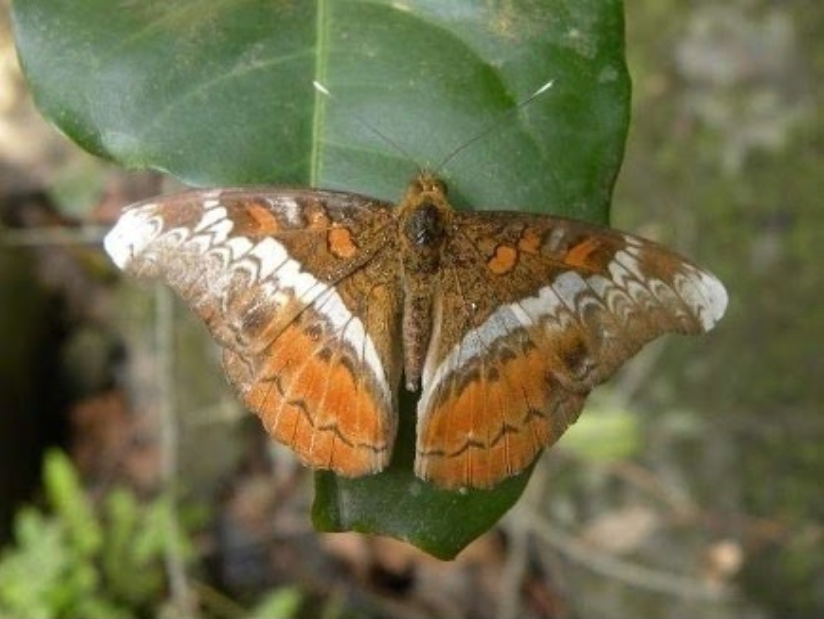 Knight Butterfly
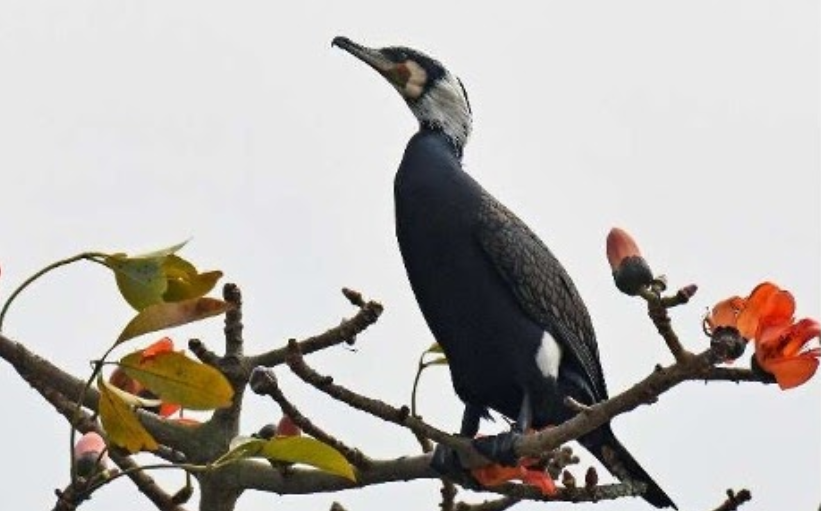 Large Cormorant (Phalacrocorax carbo)
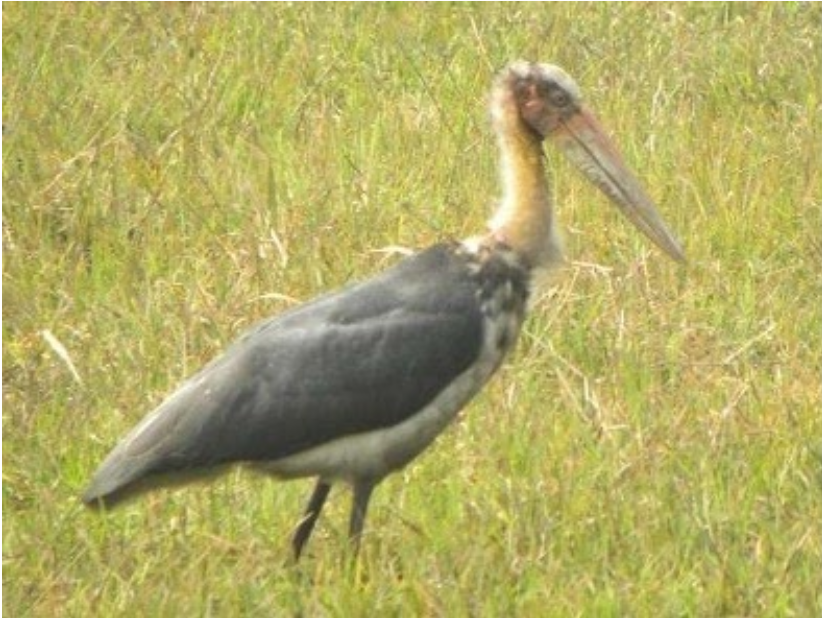 Lesser Adjutant Stork (Leptoptilos javanicus)
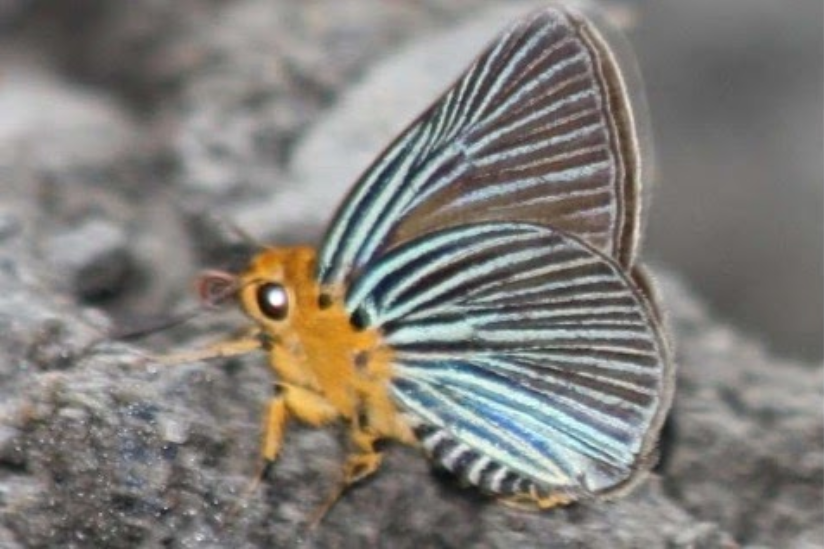 Small Green Awlet (Burara amar)
.jpg) Yellow Throated Martin (Schedule-II)
Yellow Throated Martin (Schedule-II)Green Audit
You can go through our Green audits for last three years here:
Green Audit reports provide comprehensive insights into the university's sustainability practices, energy usage, waste management, and biodiversity data. Please refer to each report for detailed findings and recommendations for campus greening.
Animal Corridors within the Campus
Gauhati University campus is acting as an endangered animal corridor owing to its high biodiversity and natural landscapes as well as forest areas. The campus harbours Common leopard (Panthera pardus fuscus) and IUCN endangered Bengal Slow Loris (Nycticebus bengalensis).
Animal Corridors
Common Leopard Corridor
Altogether 3-4 Common leopards are residing within the Gauhati University Campus and its associated forest areas annually. The overall forest complexes are such as the Gauhati University-Botanical Garden Forest complex, Gauhati University-Jalukbari reserve forest complex, and Gauhati University-Assam Engineering College forest complexes areas. The Leopard breeds in the forest area complex and 2 youngs are raised annually; after one year of age, they migrate locally through two corridors.
- Gauhati University to nearby Tetelia forest about 1.5 km through university employee quarter near Jalukbari Electricity Office, entering Tetelia through NH-37.
- Gauhati University Botanical Garden to Assam Engineering College Campus and Jalukbari Reserve Forest, passing through the private road of Assam Engineering College near AEC Guest House to Tetelia forest and Deepor beel bird sanctuary using the fellow-land and rail roads, then Rani-Garbhanga reserve forest.
Bengal Slow Loris Corridor
The Bengal slow loris is surviving within the Gauhati University forest-Jalukbari forest complex and near Sanskrit department forest-Jalukbari RF-AEC forest landscapes, forest area near university radar Station, and forest area near RCC-2, 4, 5 forest complex. The entire forest areas and University campus form contiguous landscapes and cannot be separated.